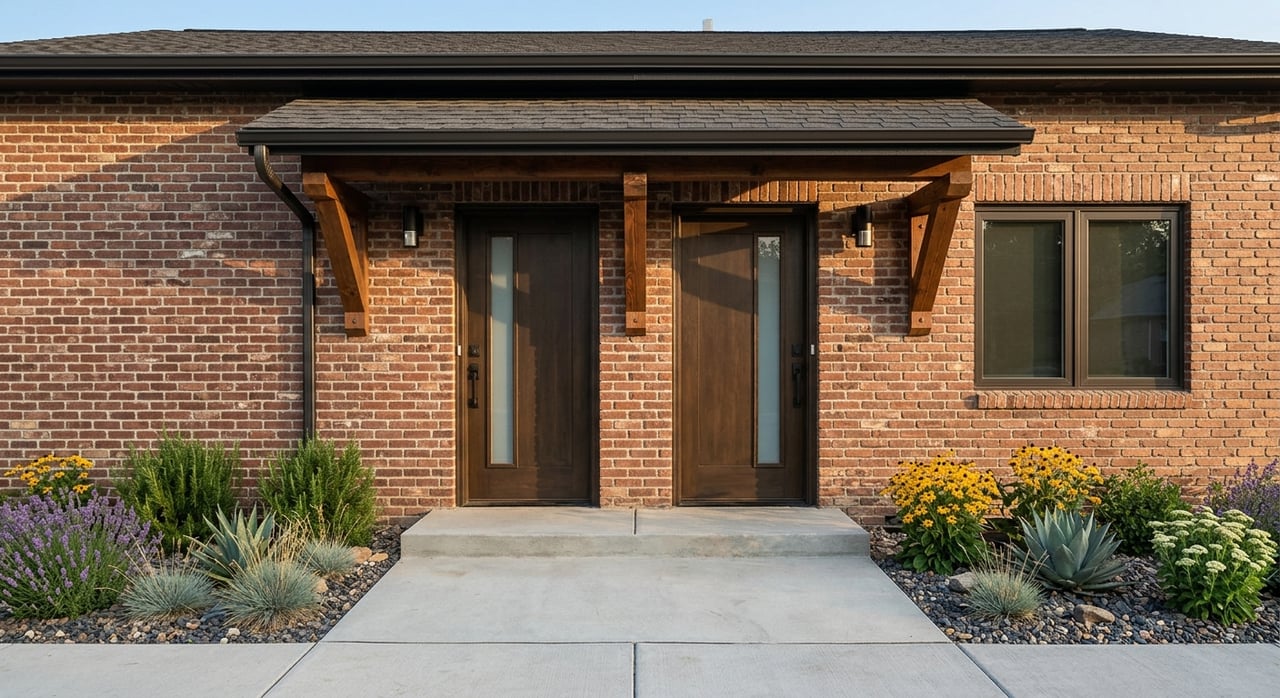
A Practical Guide to Greeley Real Estate Investment
If you want a Northern Colorado rental market with a lower cost of entry than Fort Collins or Loveland, Greeley deserves a serious look. You may be weighing cash flow, long-term demand, and the realities of zoning and permits before making a move. This guide breaks down what matters most so you can evaluate Greeley rental properties with more clarity and less guesswork. Let’s dive in.
Greeley stands out because it offers a different balance of price and rent than nearby Northern Colorado markets. The city’s 2024 population estimate was 114,363, which was 5.1% higher than its 2020 base. That kind of growth helps explain why investors keep Greeley on their radar.
On the 2020 to 2024 ACS snapshot, Greeley’s median owner-occupied home value was $402,500 and median gross rent was $1,388. By comparison, Fort Collins came in at $577,900 for median home value and $1,690 for median gross rent, while Loveland was $479,000 and $1,730. In simple terms, Greeley tends to offer a lower buy-in than both cities, even though rents are also lower.
That price gap is meaningful. Greeley’s median home value was about 30.4% below Fort Collins and 16.0% below Loveland. For many investors, that creates a more approachable entry point when you are trying to balance purchase price, debt service, and operating costs.
A strong rental market depends on more than one source of demand, and that is one of Greeley’s advantages. The University of Northern Colorado, founded in 1889, offers more than 200 undergraduate and graduate programs. That gives the city a steady education-related presence, but the tenant base is not limited to students.
Greeley’s own economic analysis identified JBS Swift, Banner Health, Greeley-Evans School District 6, UNC, and Aims Community College among the city’s largest employers. That mix points to a renter base tied to education, health care, government, and food processing. For you as an investor, that can mean demand from a wider range of household types and work schedules.
The household data also matters. Greeley’s average household size was 2.68 persons, compared with 2.25 in Fort Collins and 2.26 in Loveland. That suggests there may be stronger demand for layouts that work for roommates or households needing more functional space.
Rental demand only tells part of the story. You also want to know how much available supply is competing with your property. Greeley’s 2019 Strategic Housing Plan described the city’s multifamily market as tight, with vacancy averaging 3.41% since 2011 and 2.96% over the most recent five-year period in that plan.
Those figures sit below the 5% benchmark the plan identified as a healthy multifamily market. While past vacancy does not guarantee future performance, it does suggest that well-positioned rentals in Greeley have been operating in a relatively constrained environment. That is helpful context when you are underwriting lease-up risk or renewal assumptions.
Greeley is not just a single-family rental market. The 2021 Greeley Development Code was designed to expand housing options and specifically includes accessory dwelling units, mobile and manufactured home parks, and boarding house or single-room occupancy uses. City planning materials also say the update was meant to encourage redevelopment and support missing-middle and small-format housing.
That creates a broader opportunity set than many buyers expect. Depending on the property and zoning, you may find value in:
The key is discipline. A property that looks flexible on paper still needs to align with current zoning, occupancy rules, permit history, and actual condition.
For multifamily investors, local cap rate benchmarks can help frame expectations. A city-hosted multifamily market report showed pricing trend cap rates of about 5.0% for 3-star assets and 5.7% for 1-2 star assets. Completed year-to-date sales in that report averaged 4.9% and 3.2% respectively.
The practical takeaway is not that every deal should hit a specific number. It is that stabilized small to mid-size multifamily in Greeley often underwrites somewhere in the mid-5% range, while older or more management-intensive properties usually need more margin for rehab, vacancy, and operating risk. If you are looking at a value-add opportunity, your pro forma should reflect that risk honestly.
Taxes deserve close attention in Weld County. For tax year 2026, Weld County says residential property is assessed at 7.05% for school districts and 6.8% for other local government. Commercial and agricultural property is assessed at 25%, and industrial or vacant land at 26%.
That matters because classification can affect your expense load in a major way. If you are considering a use change, mixed-use setup, or a property that may not fit neatly into a simple residential box, tax treatment needs to be part of your early due diligence. A deal that looks strong on gross rent can weaken quickly if the tax line is off.
Before you buy, you should understand Greeley’s occupancy and use rules. The city’s rental guide says no more than two unrelated adults can live in a house in the R-L zone, and the same limit applies in R-M. The guide defines a family as one person living alone, related persons, or up to two unrelated persons and their blood relatives.
The same guide says only one dwelling unit is permitted in single-family residential zoning. It also notes that basement apartments or sleeping rooms in garages or sheds are not allowed in R-L. If you are evaluating an older home with a finished basement, converted garage, or informal bedroom setup, you will want to verify what is actually legal before you close.
This is one of the biggest traps for out-of-area investors. A layout that seems ideal for maximizing rent may not comply with local occupancy or unit rules. In Greeley, the upside is often in buying properties that already fit the code or can be improved through the right permit path.
If you are thinking about short-term rentals, Greeley’s rules are not casual. City planning materials say accessory short-term rental operators need the required permits and licenses, including a business license, sales tax license, and home occupation permit. The city’s draft rules also require the license number in listings.
Those materials also describe an 8-visitor occupancy limit, a cap of 14 consecutive nights and 30 cumulative nights per year, plus an owner-occupancy requirement. The resident owner must hold at least 50% ownership interest and live in the unit at least 180 nights per year. For most investors, that means short-term rentals are a niche, highly regulated path rather than the default strategy.
Value-add properties can look attractive in Greeley, especially when you are trying to improve rents or add functionality. But the city says building permits are required before an owner or agent constructs, enlarges, alters, repairs, moves, demolishes, or changes the occupancy of a building or structure. That is a wide enough scope that you should not treat permit research as optional.
Code compliance also covers zoning, health and safety, sanitation, parking, vehicles, and environmental concerns. In practical terms, an older home should be reviewed for permit history and current code status before you finalize your budget. Cosmetic upgrades are one thing, but unpermitted space or occupancy issues can change the entire deal.
If you are comparing Northern Colorado markets, Greeley usually stands out as the lower-entry-cost option. Fort Collins has a more renter-heavy ownership mix, with an owner-occupied rate of 51.6%, compared with 60.9% in Greeley and 62.2% in Loveland. But Fort Collins is also notably more expensive to buy into.
Loveland sits above Greeley on both median home value and median rent. That leaves Greeley in a useful middle ground for many investors who care most about basis and day-one math. It is often the market that fits a cash-flow-oriented mindset better than a prestige or appreciation-first strategy.
That does not mean every Greeley property is automatically a deal. It means the city often gives you more room to find workable numbers if you stay disciplined about underwriting, zoning, and property condition.
If you are evaluating rental property in Greeley, focus on the basics first. The strongest opportunities are often the ones with fewer surprises, not the ones with the most exciting marketing language. A calm, process-driven review can help you avoid expensive mistakes.
Use a simple checklist:
In Greeley, the most promising investments are often small multifamily properties, duplexes, ADU-friendly opportunities, and older homes that can be improved without crossing occupancy or permit lines. If you buy with clear eyes and local context, the market can offer a compelling entry point in Northern Colorado.
If you are looking at rental property in Greeley and want a disciplined, data-informed second opinion, connect with Steve Baumgaertner. You will get clear communication, local market perspective, and steady guidance as you evaluate your next move.
Get assistance in determining current property value, crafting a competitive offer, writing and negotiating a contract, and much more. Contact me today.
Forever Front Range
Address 2720 COUNCIL TREE AVE STE 178 FORT COLLINS CO 80525