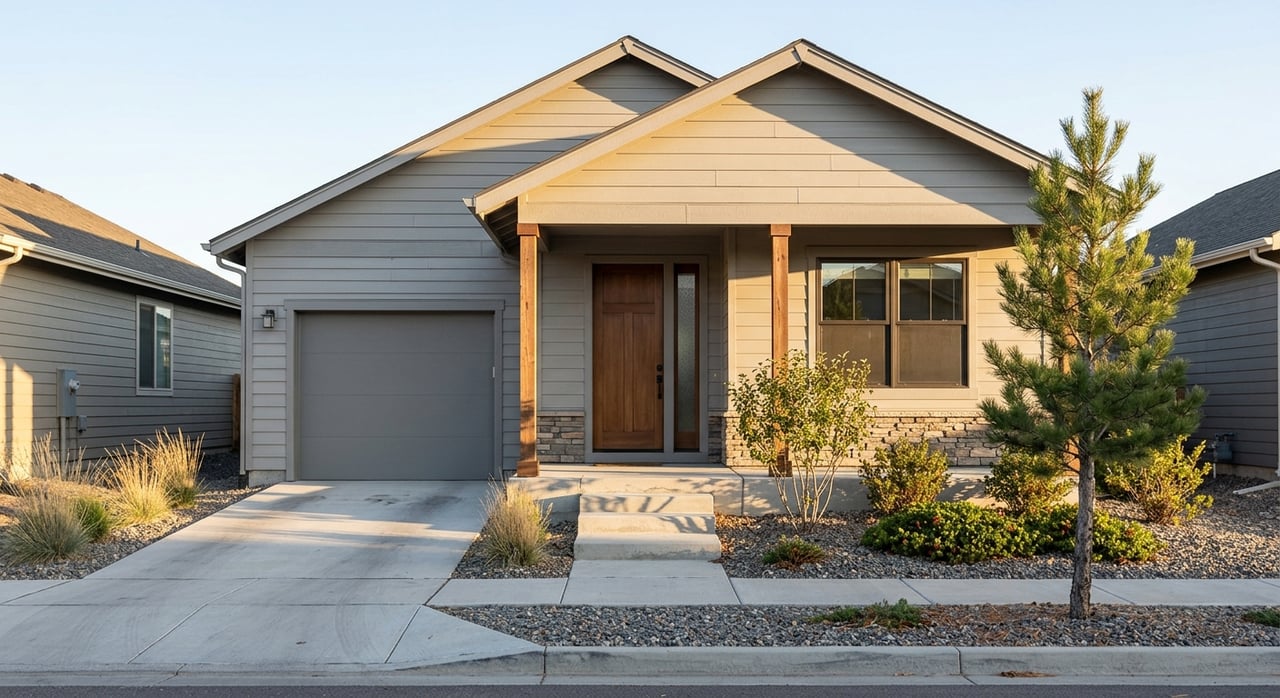
Starter Homes in Wellington CO: What Buyers Should Know
If you feel priced out of Fort Collins but still want a realistic path to homeownership in Northern Colorado, Wellington deserves a closer look. For many first-time and budget-conscious buyers, the challenge is not just finding a lower price. It is finding a home and a monthly payment that actually fit your life. In this guide, you’ll learn what “affordable” really looks like in Wellington, what types of starter homes are showing up, and what to compare before you make an offer. Let’s dive in.
Wellington has become a practical entry point for buyers who want to stay connected to the Northern Colorado market without paying Fort Collins pricing. Zillow’s current home-value benchmark for Wellington is $470,775, while Redfin’s March 2026 data shows a median sale price of $450,000 and homes going pending in about 64 days.
That puts Wellington below several nearby markets on typical home values. Based on Zillow’s current figures, Wellington is about 16.5% below Fort Collins, 6.0% below Loveland, and 18.4% below Windsor. In other words, Wellington can offer better value, but it is not a deep-discount market where every home feels cheap.
Location is part of the tradeoff. Town information highlights Wellington’s position near I-25 and Colorado State Highway 1 in northeast Larimer County, between Denver and Cheyenne. If you commute toward Fort Collins or rely on regional access, that highway connection is a big reason many buyers consider Wellington in the first place.
If you are looking for an affordable starter home in Wellington, the local market often lands in the low-to-mid $400,000s for detached homes. Recent listings and sales suggest many buyers will find 3-bedroom houses in the mid-$400,000 range, with some smaller or attached options dipping into the high $300,000s or low $400,000s.
Current active examples show a wide range. That includes a $409,000 2-bedroom, 2-bath house with 1,564 square feet, a $395,000 4-bedroom, 3-bath house with 2,335 square feet, a $463,500 3-bedroom, 3-bath house with 1,969 square feet, and a $489,900 4-bedroom, 4-bath house with 2,275 square feet.
Recent sold homes help set expectations too. Examples include 3-bedroom, 2-bath homes around 1,348 to 1,802 square feet that sold from $445,000 to $460,000, plus a 3-bedroom, 2.5-bath home with 1,738 square feet that sold at $450,000.
The big takeaway is simple: Wellington can still offer detached homes at price points that may be more approachable than nearby cities. But affordability here usually means making smart tradeoffs on size, age, finishes, location within town, and future monthly costs.
One of Wellington’s strengths is that you are not limited to one kind of housing stock. The market includes older in-town homes as well as newer subdivision product, which gives first-time buyers a few different ways to think about value.
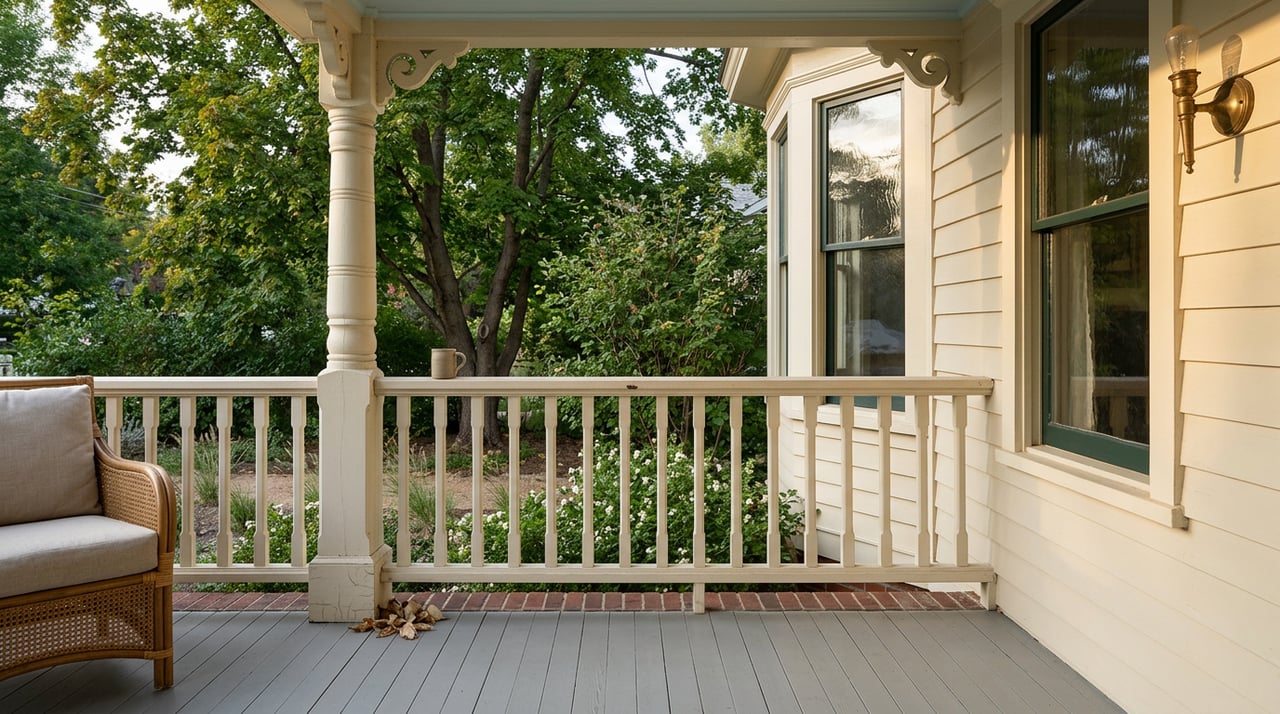
Older homes can offer a lower entry price, a more established in-town setting, or a smaller footprint that keeps costs down. Zillow data shows examples like a 1915-built cottage or bungalow in Old Town Wellington with 656 square feet, along with historical data showing a 1950-built 2-bedroom, 1-bath home around 1,200 square feet.
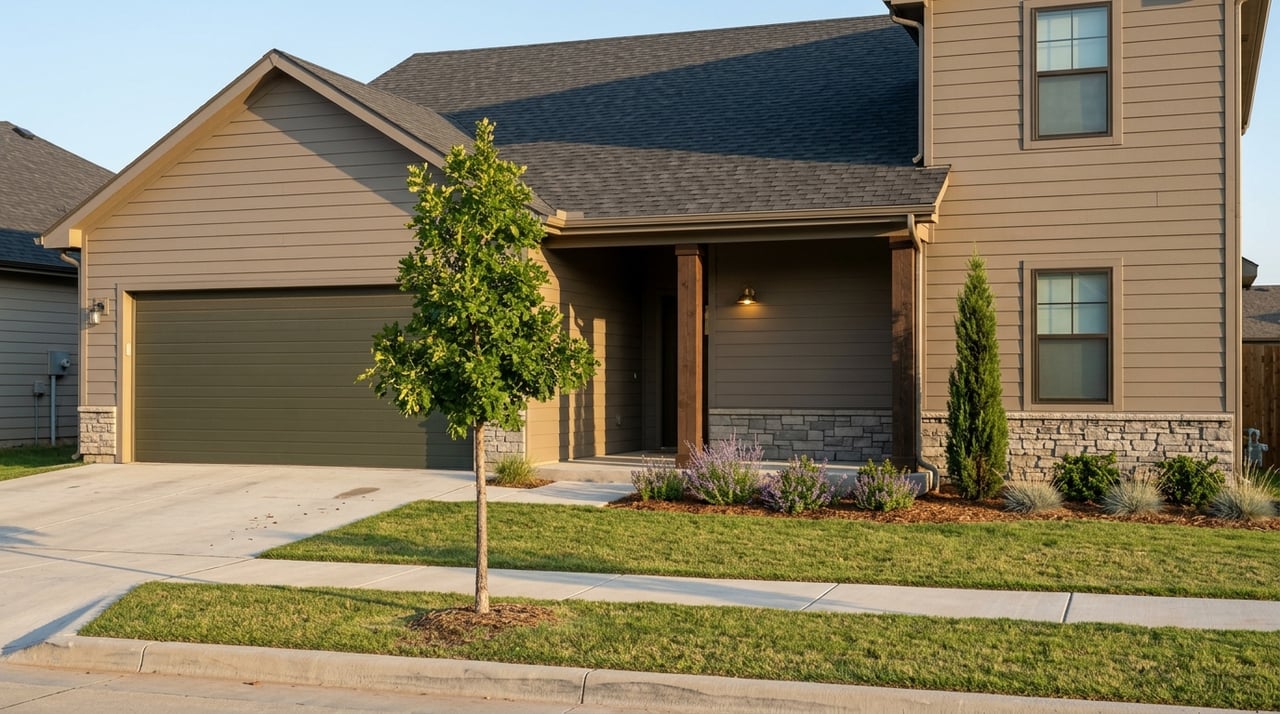
Newer homes can offer different advantages. In areas like Sage Meadows, buyers may find homes built in 2018 or 2022, and one current rental listing describes a newer ranch-style 3-bedroom, 2-bath home with a full unfinished basement and a 2-car garage.
Neither option is automatically better. An older home may need updates or more maintenance, while a newer home may come with a higher price tag or neighborhood costs that affect your monthly budget. The right choice depends on whether you value lower upfront cost, newer systems, room to grow, or a specific location within Wellington.
A starter home is only affordable if the full monthly cost works for you. That is why it helps to look beyond the purchase price and build your budget around the complete carrying cost.
Start with the mortgage payment, but do not stop there. Wellington publishes separate municipal utility charges for water, wastewater, and stormwater, which means your total monthly housing expense can be meaningfully higher than a mortgage-only estimate.
That matters when you compare homes at different price points. A house that looks manageable on paper can feel tighter once utilities and other ownership costs are included, especially if you are buying for the first time and have only been comparing rent to principal and interest.
A useful budget check can include:
This is one of the most important parts of a disciplined home search. When you know your true monthly comfort zone, it becomes much easier to spot the homes that are affordable for your life, not just affordable on a search filter.
If your down payment is the biggest obstacle, Wellington buyers should take a close look at several financing paths. The most useful programs to compare based on the current research are CHFA, FHA, VA, and USDA.
CHFA can be especially helpful for first-time and budget-conscious buyers. Borrowers using a CHFA first mortgage loan may also access down payment or closing cost assistance through grants or second mortgages. The grant can be up to the lesser of $25,000 or 3% of the first mortgage, and the second mortgage option can be up to the lesser of $25,000 or 4% of the first mortgage.
CHFA also offers free homebuyer education in English and Spanish. For buyers who want more clarity before they jump in, that education can help you understand the process, your budget, and what to expect after closing.
Other programs may also fit depending on your situation:
USDA is worth a careful look in Wellington, but you should not assume every property will qualify. Eligibility is address-specific, and income limits vary by area, so the exact home matters.
Even in a market where homes average about 1% below list price, you still need to be ready. Redfin notes that some Wellington homes continue to get multiple offers, which means financing strength and clean terms can still make a difference.
For a starter-home buyer, pre-approval does two things. First, it keeps your search grounded in a real number. Second, it helps you move faster when the right house hits the market.
That kind of preparation matters in Wellington because the best-value homes may not sit around forever. A home that is priced well, in solid condition, and in a convenient location can still attract attention.
Wellington is growing, and that growth affects how buyers should evaluate newer neighborhoods. If you are comparing homes in a subdivision rather than an older in-town area, it helps to understand what is already built and what is still planned.
The town’s 2021 Comprehensive Plan lays out a 20-plus-year vision, and the 2022 Land Use Code was updated to support that vision with clearer development standards. The code allows for a mix that includes low-density single-family areas and medium-density options such as attached homes, townhomes, duplexes, fourplexes, cottage courts, and apartments up to three stories.
That broader mix matters for buyers because today’s quiet edge-of-town neighborhood may continue to evolve. Future nearby housing types, commercial areas, and infrastructure can all shape how a subdivision feels over time.
If you are drawn to a newer home, phasing should be high on your checklist. Town planning materials for Sage Farms describe a project of roughly 293.5 acres with 241 single-family lots, future development areas, and future commercial and multifamily tracts. The town also says Sage Farms is intended to bring multiple price points into one community.
That is not a bad thing, but it does mean you should ask practical questions before buying. You will want to know whether the home is in a current filing or a future phase area, whether roads and utilities are fully complete, and what nearby parcels are planned to become.
A smart checklist for newer subdivisions includes:
This diligence becomes even more important in fast-changing fringe neighborhoods, where pricing, lot selection, and the feel of the area can shift as new phases open.
Wellington’s growth is not just about new rooftops. It also includes public infrastructure that supports long-term expansion. According to the town’s Projects & Progress information, major water and wastewater plant expansions were completed in early 2025, and those facilities can now serve double the town’s population.
For buyers, that signals a community planning for future demand. The town also notes ongoing work toward a housing needs assessment and affordable-housing strategy, which shows that housing supply and affordability remain active local priorities.
That does not guarantee lower prices, of course. But it does reinforce the idea that Wellington is a community in motion, and your home search should account for where the town is heading, not just where it is today.
For many buyers, yes. Wellington looks like a strong value play in Northern Colorado because it offers lower typical home values than Fort Collins, Loveland, and Windsor while still providing access to regional transportation routes.
The key is to stay realistic about what affordable means. In Wellington, an affordable starter home may be a smaller detached house, an older in-town property, or a newer home where you balance price against commute, utility costs, and subdivision growth.
If you approach the search with a clear budget, solid financing strategy, and a close eye on neighborhood details, Wellington can be a very practical place to start building equity. The market is not bargain-basement cheap, but it can still be one of the more attainable ways into homeownership in this part of Colorado.
If you want a clear plan for comparing Wellington homes, financing options, and monthly costs, connect with Steve Baumgaertner for steady, data-informed guidance through the process.
Get assistance in determining current property value, crafting a competitive offer, writing and negotiating a contract, and much more. Contact me today.
Forever Front Range
Address 2720 COUNCIL TREE AVE STE 178 FORT COLLINS CO 80525