Inside the Harmony Club Timnath Lifestyle This Summer
When Byron Collins built the dining room at Harmony Club, he didn't want the atmosphere of a country club. "We knew it had to be a restaurant, not a banquet hall. We didn't want it to be stuffy," he told Colorado AvidGolfer when the clubhouse opened in August 2020. "It's much more like Cheers than a country club. You always see the same staff and they know members by name."
That's an unusual thing for the owner of a private, Jim Engh-designed golf community to say out loud. Most clubs sell exclusivity. Collins sold familiarity, and the roughly 600 members who live near the course took him up on it. Late summer at Harmony Club is the best time to see what that actually looks like day to day, because right now the club is running three different lives at once: a working golf facility for a Division I program, a family recreation complex, and a neighborhood restaurant where the bartender knows your order. None of those three get much attention on their own. Together, they explain why the place feels less like a resort and more like a small town that happens to have a golf course in the middle of it.
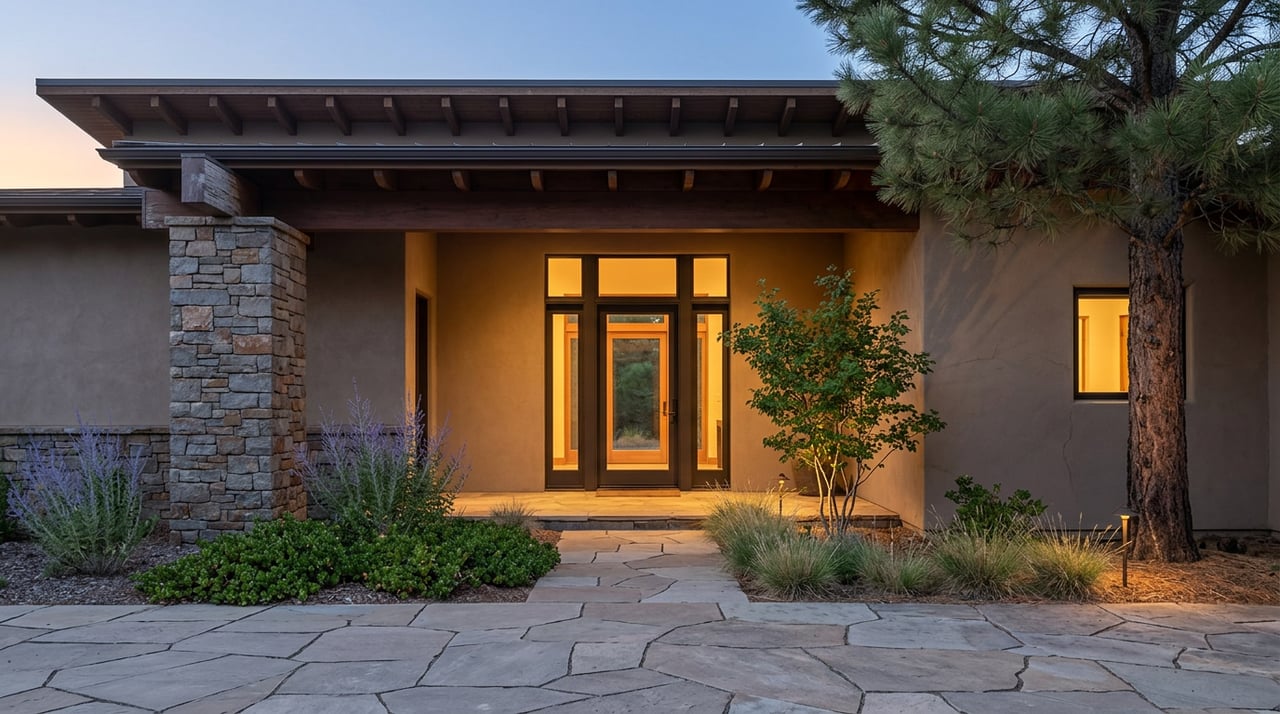
Harmony's restaurant sits inside the 22,047-square-foot clubhouse that DTJ Design built to anchor the community's amenity campus, with a two-story see-through fireplace in the Great Room, exposed heavy timber trusses, and a Crow's Nest in the pro shop where staff can see the entire course at once. It reads as formal from the outside. The clubhouse even won a 2020 NAHB Silver Award for its design.
But the restaurant itself only opened for dinner service, Wednesday through Sunday, from 5:00 to 7:30 p.m., according to Harmony's own dining page and confirmed by outside reservation listings. That's a narrower window than most people expect from a facility with a wine list and a house-made pasta program. Executive Chef Isaac Magaña runs the kitchen, and Collins has praised his "everything-from-scratch approach" on the record. If you want a table, the person to call is House Manager Chris Bumford, whose contact information is posted directly on the club's site rather than routed through a reservations app. That's a small detail, but it's the kind of small detail that tells you the place still runs on names, not systems.
Monday and Tuesday, the dining room goes dark. If you've assumed the restaurant is open daily because the clubhouse never seems to close, that assumption is wrong, and it's worth building your week around before you plan a Monday night out.
While members are booking dinner reservations, the back nine may be occupied by a very different crowd. Harmony Club serves as the primary training facility for the Colorado State University men's and women's golf teams, according to CSU Rams Athletics. The arrangement includes a 3,000-square-foot indoor practice complex with three hitting bays that open onto the driving range, an indoor putting green, a Trackman launch monitor, and a short-game area with two greens and its own bunkers. Jim Engh, who designed the course, is a CSU alum, and the connection between the club and the university runs through the design itself.
That means on any given weekday afternoon this month, the same fairways a member might play on a Saturday could have the CSU golf team running drills. It's an unusual arrangement for a private residential community, and it's one of the clearer signals that Harmony Club's golf identity has more depth to it than the typical amenity-package description of "championship course" suggests. A course good enough to be a Division I program's home base is also, on a Tuesday, the course a member's teenager might be practicing chip shots on an hour later.
Golf gets the headlines, but a meaningful share of what fills the calendar at Harmony Club doesn't involve a scorecard. The community's open-air pavilion complex includes pickleball courts, tennis courts, and a half basketball court, alongside a fitness center and a saltwater pool. For families, the club also runs a PGA Jr. League program, giving younger golfers a structured, low-pressure way into the sport within the community itself rather than through an outside academy.
Here's roughly what a resident's week can look like without ever setting foot on the golf course:
None of this requires a tee time. That's worth saying plainly, because the golf-community label tends to obscure how much of daily life here is structured around the pool, the courts, and the restaurant rather than the course itself.
It would be easy to read Collins's comment as a marketing line, the kind of thing every private club owner says to sound approachable. But the operational details back it up. A dining room that closes two nights a week and staffs a named house manager instead of a booking platform isn't optimized for turning tables. A club that lends its own course to a college team's daily practice isn't treating the facility as a private trophy to be protected from outside use. A pavilion built around pickleball and a kids' golf league isn't designed exclusively for members chasing a low handicap.
Put together, those choices describe a place that was built to be lived in rather than looked at. The NAHB Silver Award and the standing arrangement with a Division I golf program are real, and they matter for the club's reputation. But the actual rhythm of a week at Harmony Club, the one that has a college golfer on the range in the afternoon and a family at a booth by six, has more in common with a well-run small-town gathering spot than with the formal country-club image the name might conjure.
If you're a member, or you live in the surrounding streets and haven't made it to a dinner reservation yet, that gap between reputation and reality is worth closing before the weather turns. The restaurant's Wednesday-to-Sunday window is short enough that it's easy to let a month slip by without using it.
If you're weighing whether the club-centered lifestyle at Harmony Club is worth the price tag against other move-up options in the area, we broke down that comparison in an earlier look at Harmony Club as a move-up decision. For everyone else already living the Cheers version of it, the calendar above is a good place to start.
Have questions about the Front Range market, whether you're settled at Harmony Club or considering what's next? Forever Front Range is here to help, with the same steady, straightforward approach Steve Baumgaertner brings to every client relationship in Northern Colorado.


Get assistance in determining current property value, crafting a competitive offer, writing and negotiating a contract, and much more. Contact me today.
Forever Front Range
Address 2720 COUNCIL TREE AVE STE 178 FORT COLLINS CO 80525